
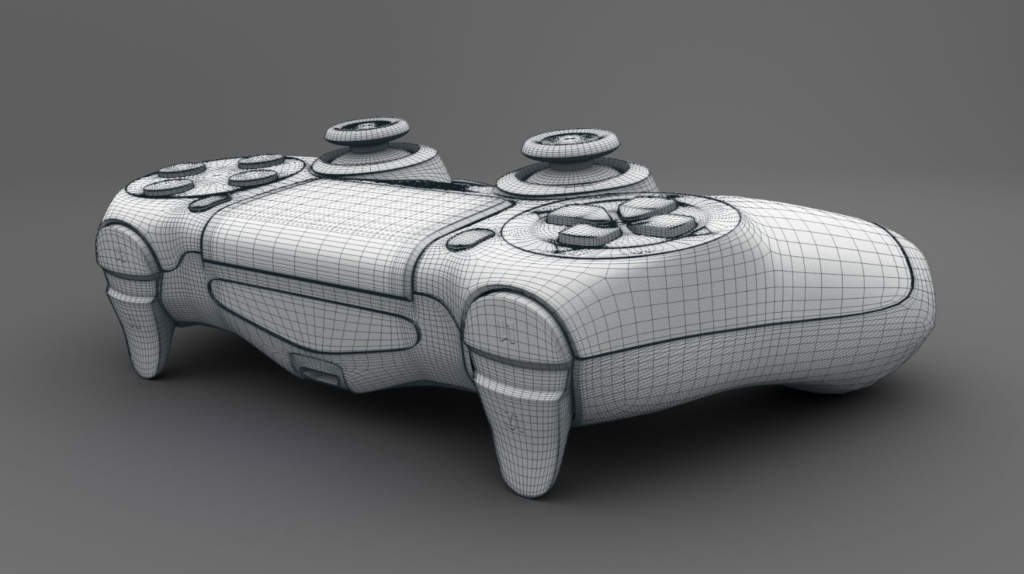
3D modeling is an amazing mix of technical skill and artistic vision which has completely changed how we design everything from video games to architectural blueprints. As you start your project on a platform like football betting online first thing that strikes you is precision is equally as important as creativity. If you want to get started in this niche, a solid understanding of the fundamentals is key before taking on complex sculpting or advancing from there with procedural textures. Whether you want to be a hobbyist or go pro, knowing the central workflow is your first step toward producing awesome digital assets.
Mesh Topology Explained: A Detailed Overview
What we often refer to as 3D modeling is polygon based. A mesh is a collection of vertices, edges, and faces that defines the shape of your 3D object. Always use four sided polygons (quads) rather than triangles (tris) or n-gons.
A Good edge flow (Good edge flow makes sure that when you animate your character the skin gets deformed properly without weird glitches. Early on, keep your “poly count” low Adding detail later is a much easier proposition than removing it from a messy, thick mesh.
The Block-out Phase: A Critical Step
First you have to do the block-out before you get into the fancy textures and lighting. Here you will use primitive shapes such as cubes and cylinders to block out the general shape of your model.
A common mistake beginners do is to go straight into high res sculpting. No amount of detail will salvage your model, if the basic “bones” of it are wrong. This is the part when you should take your time and make sure that your scale is right compared to other objects in the scene.
Hard Surface vs. Organic Modeling
You should know about the two main “flavors” of 3D modeling. Hard surface modeling is utilized for man-made objects including robots, buildings and machinery. It’s all clean lines and sharp edges.
However, organic modeling is for living beings as humans animals and plants etc. This often includes “digital sculpting,” which is more reminiscent of working with virtual clay. Most artists eventually specialize in one, but it’s worth knowing a little about both.
Texturing and Material Application
Now that we have a model, it’s time to paint it and add some “feel” to the scene. This is known as texturing. You’ll perform UV unwrapping to help you “flatten” your 3D model so you can paint a 2D image onto it.
Albedo/Diffuse: This is the diffuse color of the object, with no shadows or highlights.
Roughness Maps: roughness maps show the computer which portions of an object are shiny (like glass) versus dull (like rubber).
Normal Maps: When you need to create those so-called “fake” details, including scratches or bumps without haggling more polygons into your scene.
How to Light Your Scene for Optimum Effect
You may have the most beautiful 3D model, but if the lighting is wrong, it won’t turn out well and will look flat and unprofessional. Lighting creates mood and depth.
Usually, an artist will create a “Three-Point Lighting” setup. This consists of, a Key Light (the main source), Fill Light (to soften shadows) and Rim Light (to separate the object from the background). Another one is playing with HDRI (High Dynamic Range Imaging) as it’s a good way to get realistic environment reflections into your objects for no extra cost.
Rendering and Post-Processing
The rendering stage (the last step) is when your computer does all the math to produce a 2D image or video from your 3D scene. This will take few seconds to a few hours, depends on your hardware.
Don’t stop when the render is finished! Post-processing your image in a program like Photoshop can make all the difference. Tweaking the color balance, adding some bloom or sharpening up the edges is enough to elevate a “good” model into a purely “professional” looking one.
Essential Hardware and Software Requirements
Rather than a table, this is what you need to look for in specifications for seamless 3D modeling on your work station:
Central Processing Unit (CPU): Aim for a processor with high multi-core performance. Modeling is usually single-threaded, but rendering will use as many cores as you can throw at it.
Graphics Card (GPU): The most crucial component for a modern 3D artist. Generally, NVIDIA cards are favored due to their CUDA cores that most 3D software rely on for faster rendering.
Memory (RAM): 16GB is the bare minimum. 32GB or even 64GB is highly recommended, if you are working with complex scenes that have millions of polygons.
Storage: Drive your software and current projects on an SSD (Solid State Drive). 3D files are large, and a slow hard drive results in annoying lag.
Software Available: Blender is phenomenal and free Check industry standards such as Autodesk Maya or ZBrush for sculpting.
New 3d Artist Mistakes: Common Pitfalls And Issues
Over-complicating the Geometry
One of the most common “newbie” mistakes is incorporating excessive detail too quickly. For example, if you have a thousand vertices where ten will do, your computer is going to be bogged down and the model will be a nightmare to edit. Always use the simplest geometry possible to achieve the shape.
Ignoring Scale and Units
Have you ever brought a chair into a room and it’s skyscraping? That’s because of scale issues. First, before you do anything set your software to real-world units (either meters or inches). This is what ensures that lights and physics react realistically in your scene.
Forgetting to Save Iterations
Computers crash. This is not a question of “if,” but one of “when.” Make sure to SAVE different iterations of your file (Project_v01, Project_v02, etc.). If your file becomes corrupted, or you make an irreversible mistake, you will be glad to have a backup from the past couple hours.
The Path to 3D Mastery
Mastering 3D modeling is not an overnight endeavor. There’s a lot of failed renders, “ugly” models before things click. Continue to experiment and remain inquisitive. The 3D world is always on the move — every year sees new software and techniques.