
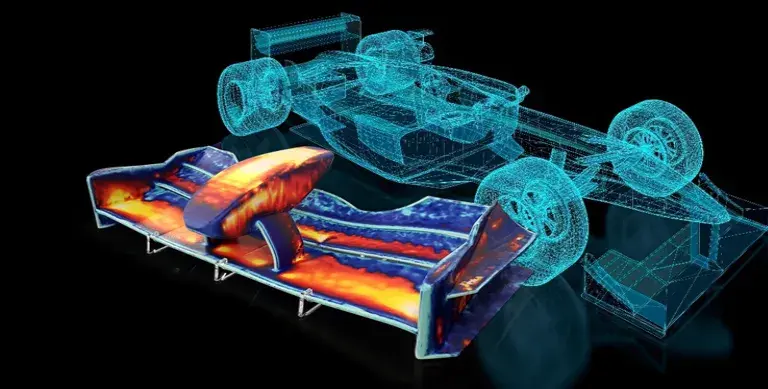
Formula 1 has always been a sport obsessed with shaving off milliseconds, and in 2026, one of its quietest weapons isn’t a new engine or tyre compound. It’s a 3D printer humming away in the corner of a factory. What used to be a niche prototyping tool has become central to how teams design, test, and even race their cars, and its influence is spreading well beyond the paddock into the hands of hobbyists building their own dream machines at home.
Why F1 Teams Can’t Live Without Additive Manufacturing
The appeal is speed. A traditional metal part can take weeks to machine and ship. A 3D-printed one can go from a designer’s screen to a physical component in days, sometimes hours. That difference matters enormously in a sport where a single upgrade can decide a championship. Red Bull’s incoming partnership with Ford for the 2026 season is a clear example: Ford’s motorsport team has 3D-printed over 1,000 parts in preparation for its F1 debut with Red Bull, using testing methods borrowed from aerospace. These aren’t simple brackets either. Complex metal and polymer components, like cold plates for batteries and cooling plates, are pushed to extremes so they can survive races at speeds averaging 200 miles an hour.
New Teams, New Manufacturing Playbooks
The clearest sign of how essential this technology has become is watching a brand-new team try to enter the sport. Cadillac’s arrival on the 2026 grid was one of the most closely watched debuts in years, and additive manufacturing played a direct role in making it happen. The team deployed seven SLA 3D printing systems to speed up critical wind tunnel testing ahead of its 2026 season debut. For a team working under tight qualification deadlines, printing test parts in-house rather than waiting on outside suppliers wasn’t a convenience. It was the difference between making the grid on time or not.
Precision Testing Behind the Scenes
What’s easy to miss is how much verification goes into every printed part before it ever touches a car. Ford’s approach shows the rigor involved: after printing, components are examined using X-ray and CT scanners, along with 3D scanning to check mechanical strength, hardness, and geometric compliance. Only after clearing metrology checks for accuracy does a part get anywhere near the track. This is a world away from the image many people still have of 3D printing as a hobbyist toy churning out plastic trinkets. In Formula 1, it’s an aerospace-grade manufacturing discipline.
Sustainability Is Reshaping the Toolkit Too
There’s also a quieter story running alongside the performance angle: material choice. As F1 pushes toward its 2030 emissions targets, teams are rethinking what they print with, not just what they print. McLaren’s collaboration with Stratasys is a good example, incorporating recycled filaments to cut waste as sustainability requirements tighten heading into the new regulatory era. It’s a reminder that additive manufacturing in motorsport isn’t only about going faster. It’s increasingly about going cleaner too.
When Fans Bring the Technology Home
Perhaps the most striking proof of how far this technology has trickled down is a project that has nothing to do with an actual F1 team. One YouTuber recently set out to build a full-size, drivable Formula 1-style car almost entirely from 3D-printed parts, starting with the front wing alone, one of the most aerodynamically demanding pieces on any car. That single component took 38 individual printed sections and more than 175 hours of printing time. It’s a hobbyist project, but it captures something real: the same technology reshaping multi-million-dollar race teams is now accessible enough that a determined enthusiast with the right printer can chase a similar dream in their own garage.
This crossover between elite engineering and grassroots fandom says a lot about where F1 culture is heading. Fans don’t just watch the sport anymore, they follow the technology, the sponsorship shifts, and the business side just as closely as the racing itself. That curiosity extends to the growing presence of betting and casino brands within the sport, an intersection that’s become impossible to ignore in recent seasons. For fans who like to follow that side of things too, exploring a no minimum deposit casino is one way to stay engaged with F1’s broader ecosystem between race weekends.
Whether it’s a race engineer printing a cooling plate overnight or a fan printing an entire car wing piece by piece, 3D printing has quietly become one of the defining technologies of modern Formula 1. It shortens the distance between an idea and a finished part, and in doing so, it’s changing who gets to build, test, and dream at the sport’s highest level.